The World Before
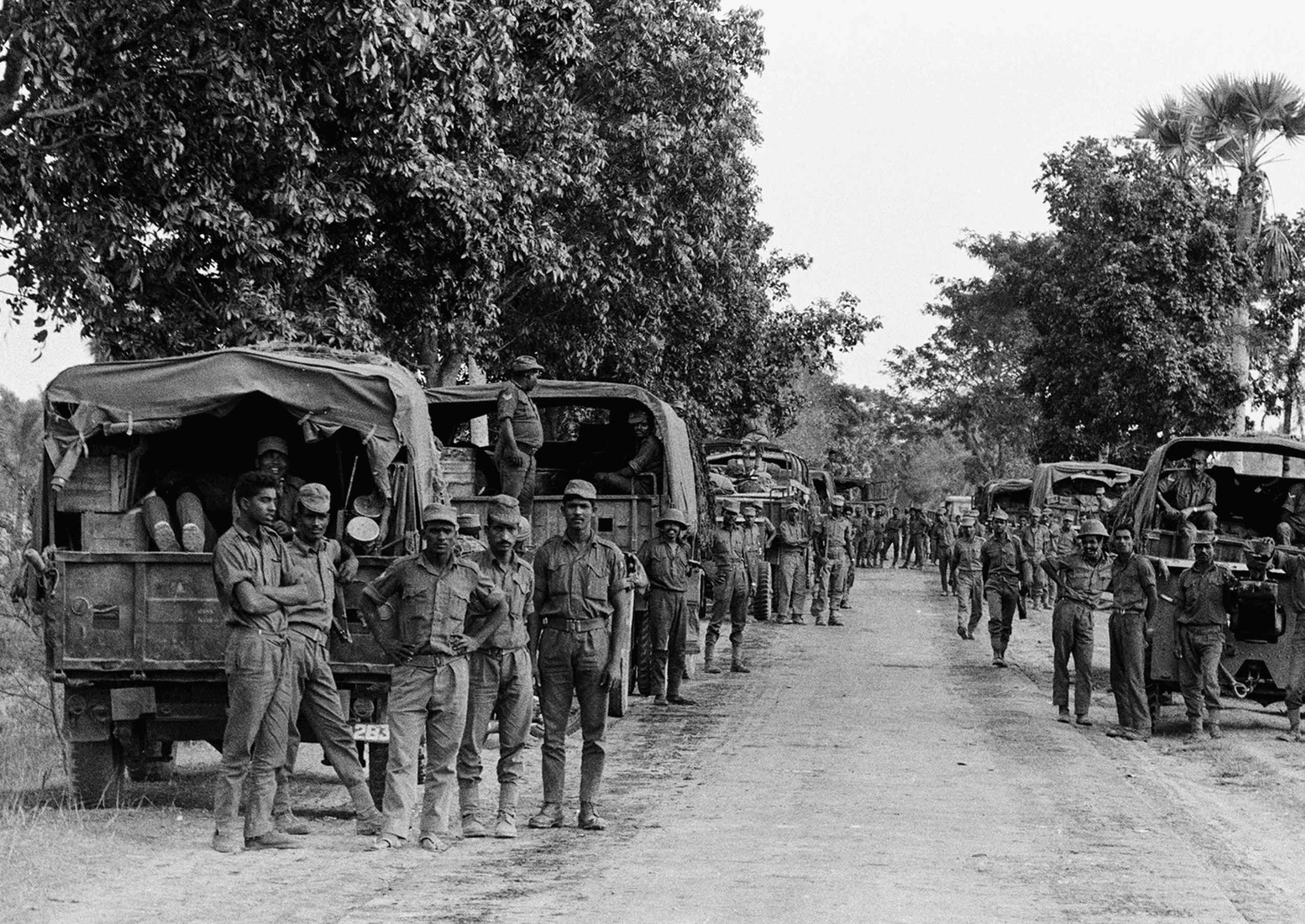
The year 1971 did not simply redraw maps; it cleaved lives. For my family, the Bangladesh Liberation War was not an abstraction of geopolitics or a chapter in a history book — it was a rupture that began in fear and has never entirely healed.
We were Hindus living in Sylhet in 1970, rooted in a landscape that held generations of memory. Home was not just a structure but a continuity: familiar markets, seasonal rhythms, temples, neighbours whose presence stitched together a sense of belonging.
When the war arrived, it did not come with a single defining moment but as a series of realisations. Each day narrowed the space of safety. Each night carried the question of whether staying meant risking everything. For minorities like us, the calculus became brutally simple: leave, or face consequences that were increasingly impossible to ignore.
So we left.
The Crossing
There was no ceremony to departure, no time to grieve what was being abandoned. We slipped across the border into India, carrying what little we could manage. In crossing that border, we did not just change countries we severed ourselves from a past that could not be reclaimed.
Tripura became our refuge, then our home. Over time, life reassembled itself in practical ways. Shelter was found. Livelihoods were rebuilt. Children grew up speaking of "here" as their place. On the surface, the arc appears almost orderly: displacement followed by resettlement, loss followed by adaptation.
But trauma does not follow such linear narratives.
What Was Really Lost
What the war dismembered was not only territory but identity. The sense of being "from" somewhere anchored to a particular soil, history, and community was fractured. Even as we built lives in Tripura, there remained an unarticulated awareness that something foundational had been lost. Not just property or possessions, but the invisible architecture of belonging.
This trauma is not always loud. It lingers in subtler forms: in the hesitation when speaking of the past, in the stories that trail off before reaching their conclusion, in the inherited silences passed down through generations. It exists in the way certain memories are preserved with almost painful clarity, while others are deliberately blurred or left untouched.
For those who experienced the displacement firsthand, the knowledge that one's life can be upended so completely and so quickly alters how security is perceived. Stability becomes something provisional, never entirely guaranteed.
For the generations that followed, the trauma is both inherited and transformed. We did not cross the border ourselves, but we grew up in its shadow. We learned, often indirectly, that home can be lost. That identity can be contested. That history is not distant it lives within families, shaping how we understand ourselves and the world around us.
Still Carrying It
There is a persistent duality: gratitude for survival alongside grief for what was left behind. Tripura is not a temporary refuge anymore it is where life has unfolded for decades. And yet, Sylhet remains present. Not as a place we can return to, but as an enduring point of origin, held in memory rather than geography.
Wars are often measured in victories and defeats, in borders gained or lost. But their deepest impact lies elsewhere in the lives that are uprooted, in the histories that are interrupted, and in the enduring sense of dislocation that cannot be neatly resolved.
For my family, the Bangladesh Liberation War was not just the birth of a nation. It was the moment our own story was broken apart and rewritten one that continues to carry both the weight of loss and the resilience of survival.