
A Literary Review
There is a moment in Meghna Gulzar's Raazi (2018) when Sehmat Khan, the Kashmiri girl married into a Pakistani military family as a RAW asset, breaks down and screams at her handler that she was never told what the work would cost her. It is the single most subversive scene in the modern Indian spy film and its rarity is the subject of this review. For every Raazi, Hindi cinema has produced a dozen films in which the intelligence officer is an uncomplicated instrument of national virtue, the enemy is a cartoon in a Rawalpindi bunker, and the state is never wrong. The question worth asking is not whether Bollywood produces propaganda all national cinemas flatter their states but how the relationship between the Indian security establishment and the Bombay film industry actually functions, what its mechanisms are, and what it has done to the espionage genre as literature.
The Founding Compact: Cinema as Nation-Building
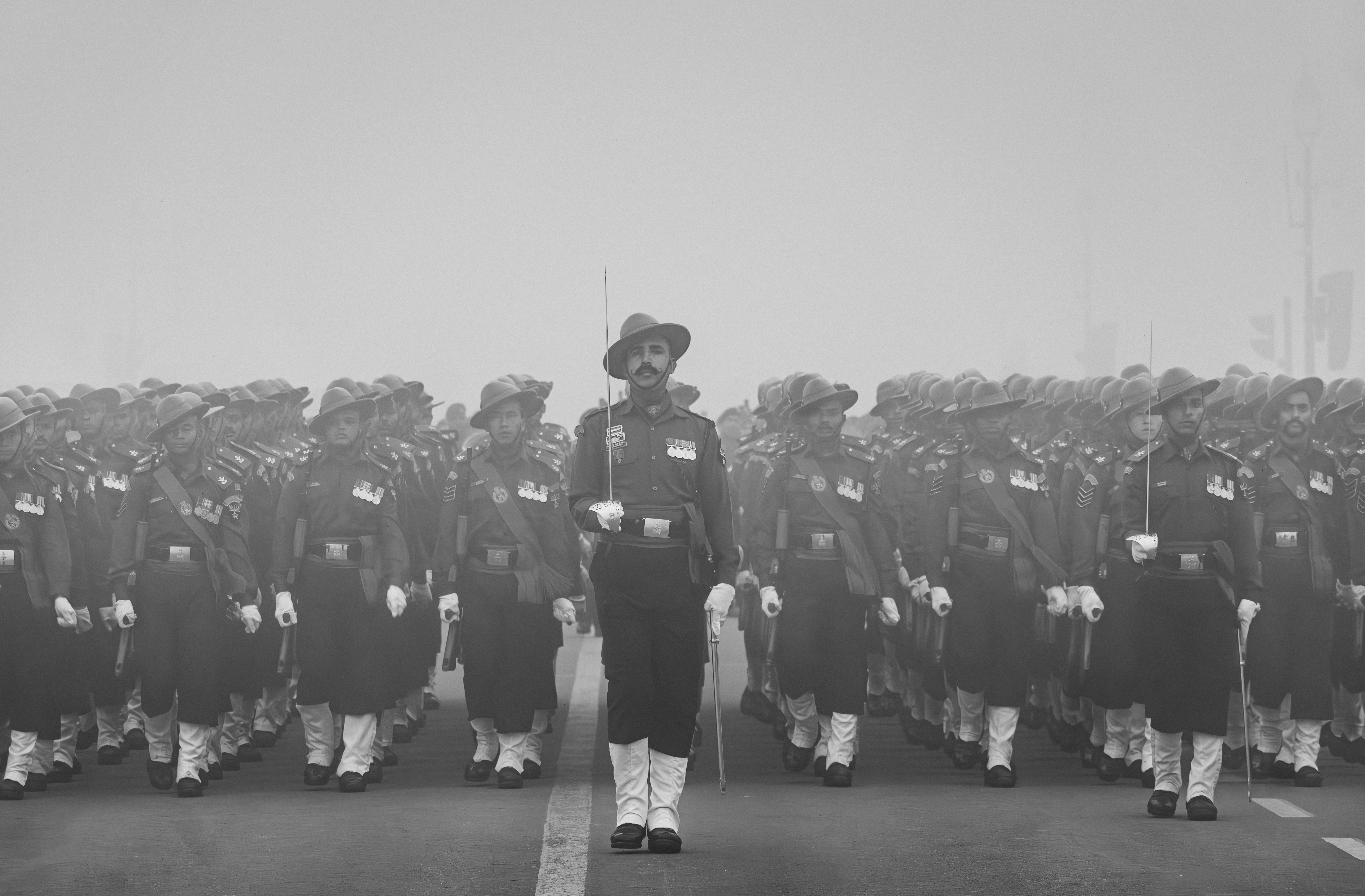
The relationship predates RAW itself (founded 1968). Chetan Anand's Haqeeqat (1964), the great elegy for the soldiers of the 1962 China war, was made with the full cooperation of the Indian Army and the blessing of the Nehru government, which needed the humiliation of 1962 reframed as sacrifice rather than failure. The film ends with documentary footage of Nehru and the strains of "Ab Tumhare Hawale Watan Saathiyo" - a handover of the nation from the dead soldier to the audience. Three years later, Manoj Kumar's Upkar (1967) was made, by Kumar's own account, at the personal suggestion of Prime Minister Lal Bahadur Shastri, who wanted his slogan "Jai Jawan, Jai Kisan" turned into a story. This is the founding compact of Indian state cinema: not covert commissioning, but the Prime Minister as story editor. What is striking, from a literary standpoint, is how durable this template proved. The soldier-farmer, the sacrificing patriot, the nation-as-mother these are the stock figures that the later intelligence film would inherit wholesale, simply swapping the uniform for a safari suit and an earpiece.
The Nineties Turn: The ISI Enters the Frame
For most of the Cold War, the Hindi spy film was a Bond pastiche Ankhen (1968), the Gunmaster G-9 films with vaguely foreign villains and no reference to actual agencies. The genre acquired a real adversary only after Kashmir erupted in 1989 and Bombay was bombed in 1993. J.P. Dutta's Border (1997), made with massive army cooperation, and John Matthew Matthan's Sarfarosh (1999) mark the turn. Sarfarosh is the more interesting text: its villain, the ghazal singer Gulfam Hassan, is a Pakistani deep-cover asset running guns into India — the ISI reimagined as a poet. The film is genuinely well-made, which is precisely what makes it effective; its argument, that Pakistani cultural warmth is a mask over state malice, entered the bloodstream of the genre and never left.
Note the structural mechanism here, because it recurs. The Ministry of Defence operates a script-vetting system: any production that wants access to military bases, hardware, uniforms, or personnel must submit its screenplay for approval. This is publicly acknowledged and entirely legal and it also functions as a soft censorship apparatus. A film that depicts the army or the agencies critically does not get the tanks. Over decades, this shapes the genre the way water shapes stone: not by banning dissent but by making orthodoxy cheaper to produce.

The RAW Hero and the YRF Spy Universe
The 2010s produced something genuinely new: the RAW officer as mass-market franchise hero. Ek Tha Tiger (2012) gave Salman Khan the role of Tiger, a RAW agent who falls in love with an ISI agent a premise with real subversive potential that the film carefully defuses by having both lovers exit their agencies rather than question them. Yash Raj Films then built an entire "spy universe" on this foundation: Tiger Zinda Hai (2017), War (2019), Pathaan (2023), Tiger 3 (2023), War 2 (2025). These films are not government products; they are commercial machines. But they perform a service no ministry could buy: they make the intelligence services glamorous, omnicompetent, and morally self-evident. Pathaan tortured by rogue ex-agents, Tiger rescuing nurses from an ISIS stand-in — the state's failures are always the work of individual traitors, never of the institution.
The lower-budget tier of the genre hews closer to claimed history and is, if anything, more openly hagiographic: Romeo Akbar Walter (2019), Bell Bottom (2021), Mission Majnu (2023) — the last a fictionalised account of RAW's penetration of Pakistan's nuclear programme in the 1970s, in which the deep-cover agent is a tailor in Rawalpindi who dies transmitting the location of Kahuta. The film's Pakistan is a costume; its RAW is a church. Compare it with Raazi, drawn from Harinder Sikka's novel Calling Sehmat, which covers almost identical ground a young Indian asset inside a Pakistani military household during the run-up to 1971 and arrives at the opposite conclusion: that the tradecraft consumes the agent,
that her handlers regard her as expendable, and that the Pakistani family she betrays is composed of decent people. Raazi was a major hit, which proves the audience will accept moral complexity. The industry simply, mostly, declines to offer it.
Sarkari Cinema: The Post-2014 Settlement
The relationship changed in kind, not merely degree, after 2014. Critics coined the term "sarkari cinema" for the wave of films whose politics aligned so precisely with the ruling establishment, and whose release dates clustered so conveniently around elections, that the alignment could no longer be read as coincidence.
Uri: The Surgical Strike (2019) is the keystone text. Released weeks before the general election, dramatising the 2016 cross-border raids that were the government's signature security achievement, it gave the campaign its actual war-cry: "How's the josh?"- a line the Prime Minister himself repeated at public events, and which ministers traded on stage. The film's most revealing invention is its fictional intelligence apparatus: a young analyst improvises drone surveillance under the approving eye of a National Security Advisor character transparently modelled on Ajit Doval, played as a genial mastermind. This is propaganda in the precise sense not merely flattering the nation, but constructing a heroic screen persona for a serving, named-in-all-but-name intelligence official.

The Kashmir Files (2022) extended the model. The film's account of the Pandit exodus was endorsed from the Prime Minister's own podium; BJP-governed states declared it tax-free; party workers block-booked screenings. Whatever one's view of its historiography, the machinery around it official endorsement, fiscal subsidy, organised amplification is the closest independent India has come to a state distribution apparatus for a commercial film. The same machinery works in reverse as negative propaganda: certification delays, cuts, and informal pressure for films that transgress. Vishal Bhardwaj's Haider (2014), his Kashmiri Hamlet, in which the army's interrogation centres and disappearances are the rotten state of Denmark, required dozens of cuts and provoked boycott campaigns; it remains the genre's great counter-text, and the road it opened has been left conspicuously untravelled.
Mechanism, Not Conspiracy
The honest literary-critical conclusion is that "Indian intelligence uses Bollywood" is both true and imprecise. There is little public evidence of RAW covertly commissioning scripts in the manner of the CIA's documented Hollywood liaisons. What exists instead is a convergence of incentives so complete that commissioning is unnecessary: a defence establishment that trades access for approval; a censor board that raises the cost of dissent; state governments that subsidise orthodoxy with tax exemptions; a political leadership willing to campaign on a film's dialogue; and an industry anxious after years of tax raids on its stars and studios that has learned which stories are safe. The propaganda is emergent rather than commanded, which makes it more effective and harder to attribute. No file needs to exist.
What It Costs the Genre
For the espionage novel and film as literature, the cost is severe. The great tradition of the genre le Carré above all is built on the proposition that intelligence work is where a nation's ideals go to be quietly betrayed, and that the honest spy story is therefore always partly a story against the state that employs the spy. The sarkari spy film inverts this: the agency is the repository of virtue and doubt itself is the enemy's weapon. The result is a genre rich in production value and poor in tragedy. Sehmat Khan screaming at her handler; Haider in the snow among the disappeared; even Ek Tha Tiger's lovers walking away from both their agencies these fragments show what an Indian le Carré tradition could look like. The material is extraordinary: RAW's real history is full of moral wreckage, abandoned assets, and operations that curdled. The industry knows where the tanks come from, and mostly declines to write it. That refusal is itself the deepest form of the propaganda not the films that were made, but the shelf of films that never will be.

