The Land That Opened
I was born in 1974, but my earliest memories are not of toys or schoolbooks they are of conversations. Low, urgent conversations among elders who believed children were not listening. But I was. I remember the cadence of worry more than the words themselves: names of places repeated like incantations, fragments of maps sketched in the air, the steady rhythm of anxiety that accompanied every mention of "the border."
In our corner of Tripura, history did not arrive through newspapers it crossed the land itself, barefoot and hungry.
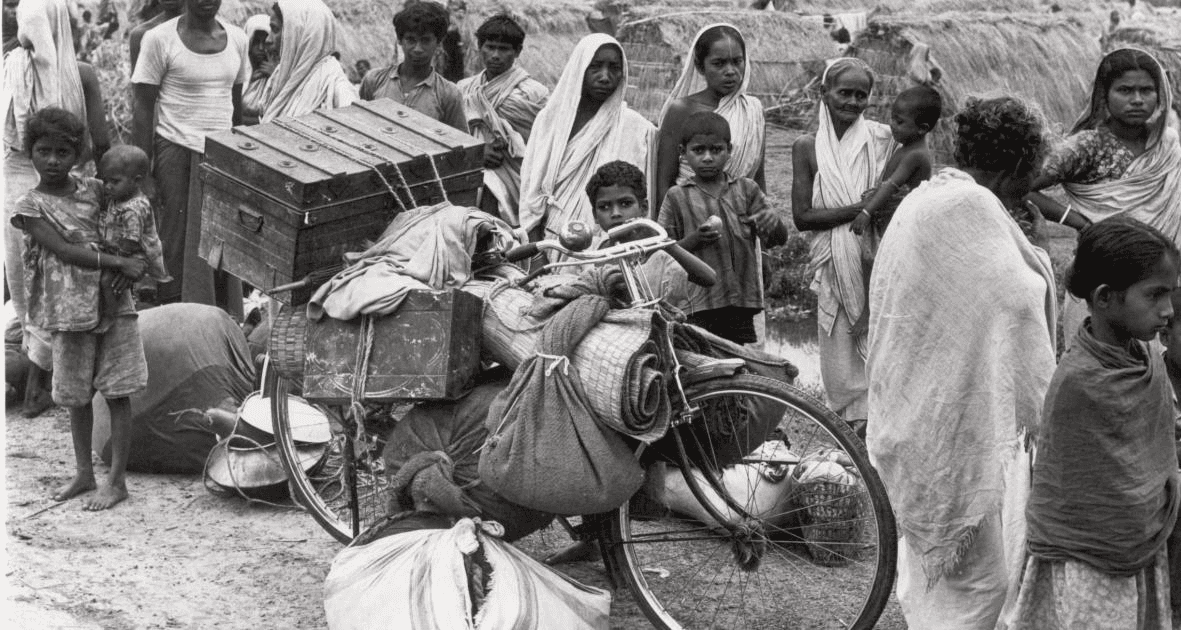
My grandfather stood at the centre of this world. He was a farmer by profession and a community elder by temperament—one of those men whose authority did not need to be asserted because it was assumed. When the refugees began to arrive from East Pakistan in 1971 first in trickles, then in waves there was hesitation among landowners. Fear, even. But my grandfather did not hesitate.
"This land will be opened," he said. "It is our duty."
He framed it not in legal terms but in moral ones. A dharmic obligation. And so our farmland became a refuge. Makeshift shelters rose where there had once been open fields, cooking fires dotted the landscape at dusk, and the quiet dignity of people who had lost everything but refused to surrender their composure became part of our daily landscape. My family did not merely donate space we were drawn into the machinery of relief itself: food distribution, coordination with local authorities, the endless logistics of sustaining thousands of displaced people.
What Crossed the Border
Later, I would learn the details of the genocide in East Pakistan the systematic violence unleashed in March 1971 under Operation Searchlight. Villages were razed. Civilians were executed en masse. Women were subjected to widespread sexual violence, deliberately used as an instrument of terror. Minority communities, particularly Hindus, were singled out with chilling precision.
The numbers remain contested, but even conservative estimates speak of hundreds of thousands killed. What is not contested is the intent the use of organised military force against civilian populations to suppress identity, dissent, and the very idea of autonomy.
For us in Tripura, these were not distant statistics. They arrived in human form exhausted, traumatised, carrying stories that were often too painful to articulate fully.
And in the background, though I only came to understand it later, there was another layer of activity: structured, deliberate, and largely invisible.
Tradecraft at the Kitchen Table
One of my relatives worked with the Special Services Bureau the SSB under the Directorate General of Security. To me, as a child, she was simply a family member who was often absent and spoke little about her work. There was a certain quietness about her, a discipline that set her apart.
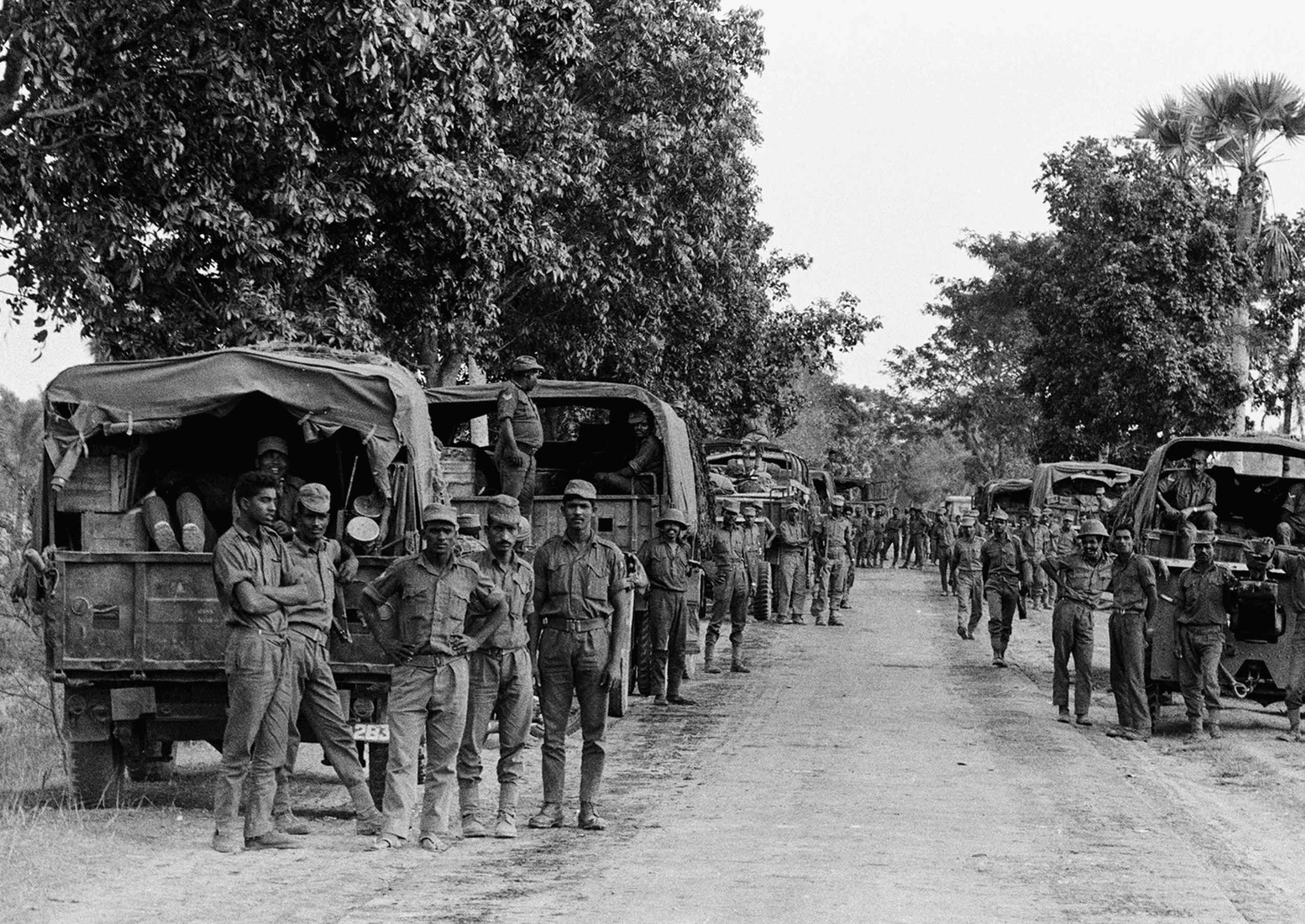
During the Bangladesh War, the SSB formed Village Defence Committees groups of armed villagers trained to protect their communities from incursions and sabotage. My relative was involved in setting up these committees moving through remote areas, building trust among populations already under immense stress, transforming untrained civilians into cohesive defensive units.
On the surface these committees were defensive structures. But they also functioned as nodes of information. In environments where formal intelligence networks were limited by terrain, local populations became both sensors and stabilisers. Relief and intelligence were not separate domains they overlapped constantly. Even the act of feeding and sheltering refugees had strategic implications.
This integration of roles was my first exposure to what I would later recognise as tradecraft. But as a child, I encountered it in a more tangible form: through my grandfather's study.
Books everywhere law reports beside religious texts, travelogues alongside historical accounts. Maps pinned to walls, some official, others hand-altered with notes in the margins and routes traced in ink. At the centre, a large desk worn smooth from years of use. When my grandfather sat behind it, he appeared both anchored and removed as though the room itself was an extension of his mind.
What the Border Taught Me
Those early years in Tripura did not give me a formal education in geopolitics. They gave me something harder to name an instinct for how the world actually operates beneath its surface.
I grew up understanding that borders are not lines on maps. They are places where history becomes personal. Where a family decision to open farmland is also a strategic act. Where a quiet relative who travels often and says little is doing work that shapes the security of thousands. Where a room full of books and maps is not merely a study it is a way of seeing.
The 1971 war ended. A nation was born. The refugees eventually returned or rebuilt. The Village Defence Committees were stood down. The relief camps closed.
But the impressions remained.
Every story I have written since carries some trace of that landscape the border anxiety, the moral weight of displacement, the quiet presence of intelligence work woven into ordinary life. The Hari Vandra series did not emerge from research alone. It emerged from memory. From those evening conversations I was not supposed to be listening to. From a grandfather who believed duty required no justification. From a relative whose silence said more than most people's words.
Hidden in plain sight that is where the real stories live. I learned that before I learned anything else.