The Law of Nations and the Art of Secrets
When I arrived at King's College London in the autumn of 1993, I believed I was training to become a lawyer. I was nineteen, born in Kailashahar, a small town in Tripura pressed against the border with what had once been East Pakistan, and I had come to the Strand to learn how the world was governed by rules. By the time I left in 1996, I had learned something more unsettling: that the rules were written in public, but the world was very often decided in private. It took me several more years to understand what to do with that knowledge. The answer, when it came, was fiction.
A discipline built on the gap between word and deed
International law is a peculiar subject for a young person. It presents itself as a grand architecture of treaties, conventions and resolutions, and yet every lecture seemed to return, sooner or later, to the same uncomfortable question: what happens when a state simply decides not to comply? We studied the Charter of the United Nations, the law of armed conflict and the principle of non-intervention, and then we read the newspapers and watched those principles being tested, bent and quietly abandoned.
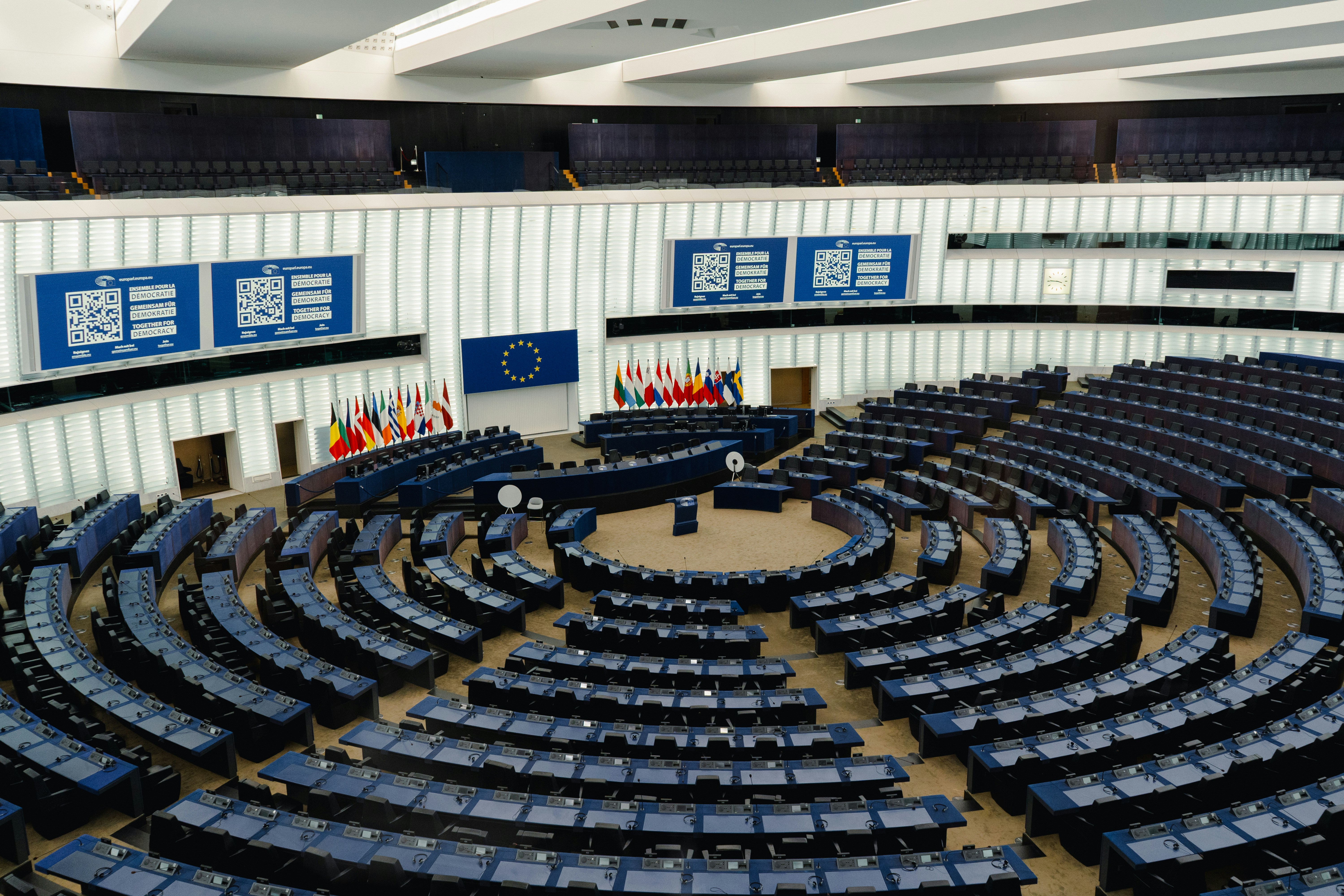
That gap between what states say and what they do is the natural territory of the spy novelist. An intelligence officer lives precisely in the space between the official communiqué and the private instruction. I did not see it this way at the time, but my legal education was teaching me to read the world as an espionage writer must: to treat every public statement as a cover story and to ask what lay underneath it.
The years in which the world came apart
The three years I spent at King's were not quiet ones. The Cold War had ended only a few years earlier, and the confident talk of a new world order was already collapsing under the weight of events.
The Balkans.Bosnia was the defining crisis of my student years. In May 1993, a few months before I enrolled, the Security Council established the International Criminal Tribunal for the former Yugoslavia, the first international war crimes court since Nuremberg and Tokyo. For a student of international law this was electrifying: the law was being rebuilt in front of us. Yet in July 1995 came Srebrenica, where thousands of Bosniak men and boys were murdered in an area the United Nations had declared safe. The Dayton Agreement followed at the end of that year. I learned from Bosnia that institutions could be created with noble intentions and still fail entirely at the moment of greatest need, and that the real decisions were frequently taken by a handful of people in rooms the public never saw.
Rwanda. In the spring of 1994, the genocide in Rwanda killed hundreds of thousands of people in roughly a hundred days while the international community hesitated over whether to use the word "genocide" at all, precisely because of the legal obligations the word might trigger. A second tribunal was established that November. Rwanda taught me that language itself can be an instrument of policy, and that the choice of a single word may be a calculated act of evasion.

Britain's own secret state. Closer to home, the British intelligence services were stepping, for the first time, into the light of statute. The Intelligence Services Act 1994 placed the Secret Intelligence Service and GCHQ on a formal legal footing, while the Security Service had begun to acknowledge its leadership publicly. Then, in February 1996, Sir Richard Scott published his report into the Arms-to-Iraq affair, which arose from the collapse of the Matrix Churchill prosecution. Here was a story in which businessmen had supplied equipment to Saddam Hussein's Iraq, some of them reporting to British intelligence, while ministers had signed public interest immunity certificates that might have kept relevant evidence from their defence. To a law student, it was a lesson in how the machinery of secrecy could press directly upon the machinery of justice. To a future novelist, it was a ready-made plot.
Northern Ireland. The Downing Street Declaration of December 1993, the IRA ceasefire of August 1994 and its shattering end with the Canary Wharf bombing in February 1996 formed a constant backdrop to life in London. It was impossible to live in the city during those years without sensing the long, hidden war of informers, handlers and back channels that lay behind the headlines.
The Middle East and South Africa. The Oslo Accords were signed in September 1993, and for a time peace seemed possible. In November 1995 Yitzhak Rabin was assassinated, and that hope began to drain away. Against this, the inauguration of Nelson Mandela in May 1994 stood as proof that political transformation could happen without catastrophe. Both events taught me that history turns on individual people as well as on great forces, which is perhaps the first lesson any novelist must learn.
The world of the double agent. In February 1994 the American authorities arrested Aldrich Ames, a senior CIA officer who had spent years selling secrets to Moscow, at the cost of the lives of agents he had betrayed. The Cold War was over, but its betrayals were still surfacing. The figure of the traitor at the heart of the institution, so central to le Carré, was suddenly a matter of current news rather than literary memory.

India, seen from London
As a young man of Indian birth studying in London, I followed events in South Asia with a particular intensity, and at a particular distance. Distance can sharpen understanding as well as dull it.
In March 1993, shortly before I began my studies, the serial bombings in Bombay showed how communal violence, organised crime and cross-border sponsorship could combine with lethal effect. Kashmir was in the depths of its insurgency: the siege at the Hazratbal shrine in late 1993, the destruction of Charar-e-Sharif in 1995 and, that same summer, the kidnapping of Western tourists by the group calling itself Al-Faran, which brought the conflict directly into British newspapers. By 1996, India was also refusing to accept the Comprehensive Nuclear-Test-Ban Treaty, and I found myself studying arms control law at the very moment my country of birth was defying its premises.
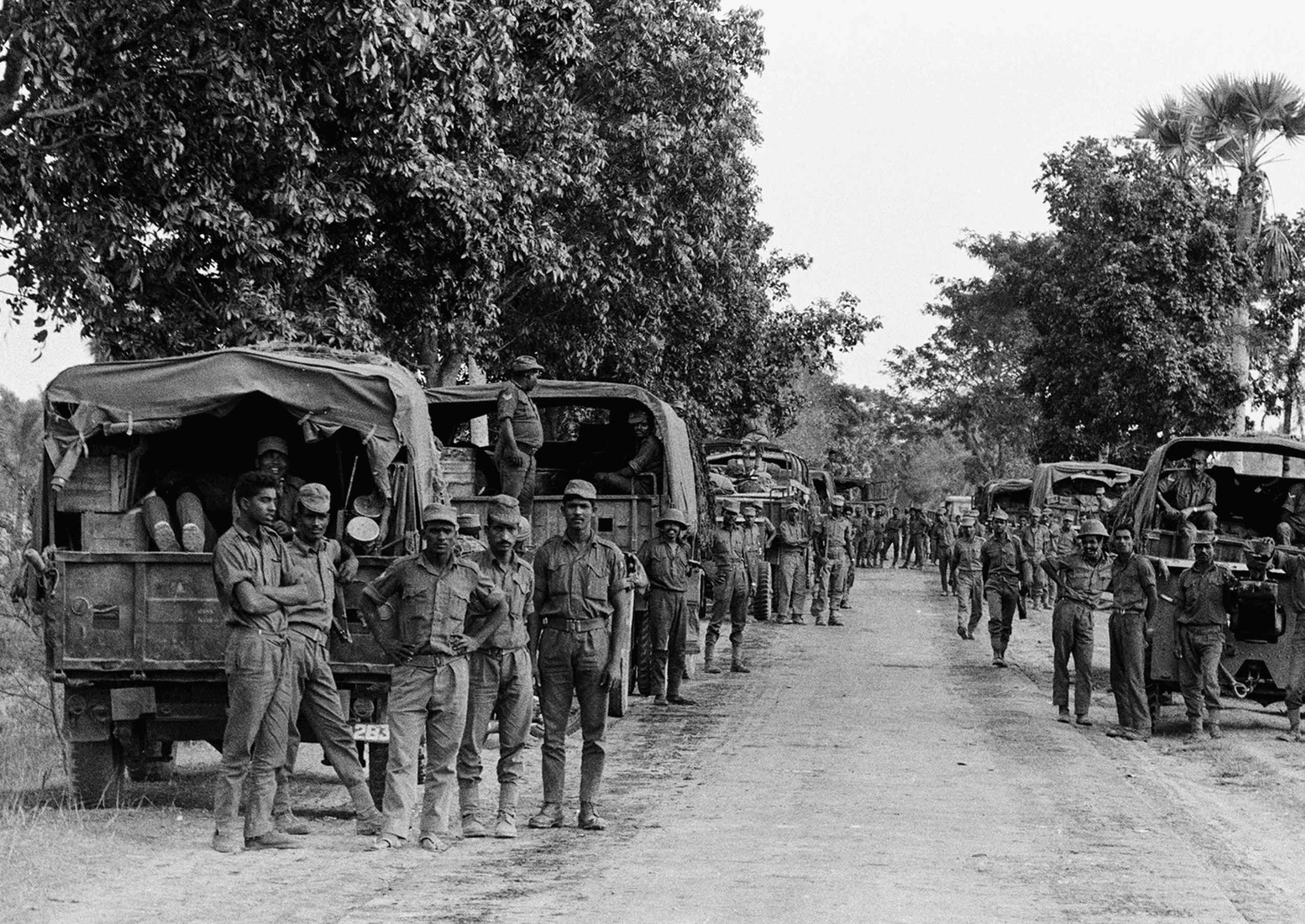
Then there was my own region. The north-east of India, Tripura included, was living through its own insurgencies, largely unnoticed in Britain. In December 1995 came the Purulia arms drop, in which an aircraft released a large consignment of weapons over West Bengal. Among those later convicted was a British arms dealer. Nothing I had read in any textbook prepared me for that story: an international conspiracy, foreign nationals, a clandestine flight, unanswered questions about who knew what and when. It seemed to me then, and seems to me now, to belong more naturally to a thriller than to a law report. In a sense, that was the moment when the two halves of my education began to meet.
From the law to the novel
I did not leave King's and begin writing spy novels. The path was longer than that. But when, in 2002, I was walking in Stanmer Park in Brighton and the figure of Hari Vandra first came to me, I understood that he had been forming for a decade. He is, in a sense, a product of everything I studied and witnessed between 1993 and 1996: a man who knows the formal rules of the international order intimately, and who works in the shadows where those rules are negotiated, broken and enforced by other means.
My legal education gave me three things that I have relied upon ever since.
The first is a respect for structure. A good legal argument and a good espionage plot share the same skeleton: a premise, a chain of evidence, a test of credibility and a conclusion that must survive cross-examination. A reader of thrillers, like a judge, will notice the gap in the reasoning.
The second is an ear for language as a weapon. Treaties, resolutions and diplomatic notes are written with immense care precisely because every word may later be used against the state that signed it. I learned to read for what a document does not say, and that habit lies at the heart of how my characters read one another.
The third, and most important, is moral ambiguity. International law is the study of competing legitimacies: sovereignty against human rights, security against liberty, the interests of a nation against the claims of humanity. There are rarely clean answers. The finest espionage fiction, from Greene to le Carré, lives in exactly that territory, and it is where I have tried to place my own work.
I sometimes say that I studied the law of nations and ended up writing about the lawlessness beneath it. That is not quite fair to the law. It would be more accurate to say that King's taught me where to look. The rest has been a matter of imagination, patience and a great many long walks.