I enter Stanmer Park from the Lewes Road side, where the traffic's roar fades within a hundred paces into the hush of the South Downs. The land rises in long green swells of chalk grassland, and the Palladian bulk of Stanmer House sits pale against the hill. Beyond it the flint cottages of the old village huddle beside St Peter's church, and the pond holds a restless sky. Rooks argue in the tall trees. In autumn the beech woods turn to copper, and the paths are soft with mast and fallen leaves.

My walks are long, often three or four hours. I climb past the walled garden into Great Wood, where the light turns green and the only sounds are woodpeckers and my own breathing. From the ridge I can see Brighton spread towards the sea, a grey-silver line on the horizon.
It was here, in 2002, that Hari Vandra first walked beside me. I was on the ridge path, thinking about loyalty and the price of secrets, when a man took shape in my mind: a watcher, patient and wounded, who understood that every nation lies to protect itself. I did not know his name that day, only his silence.
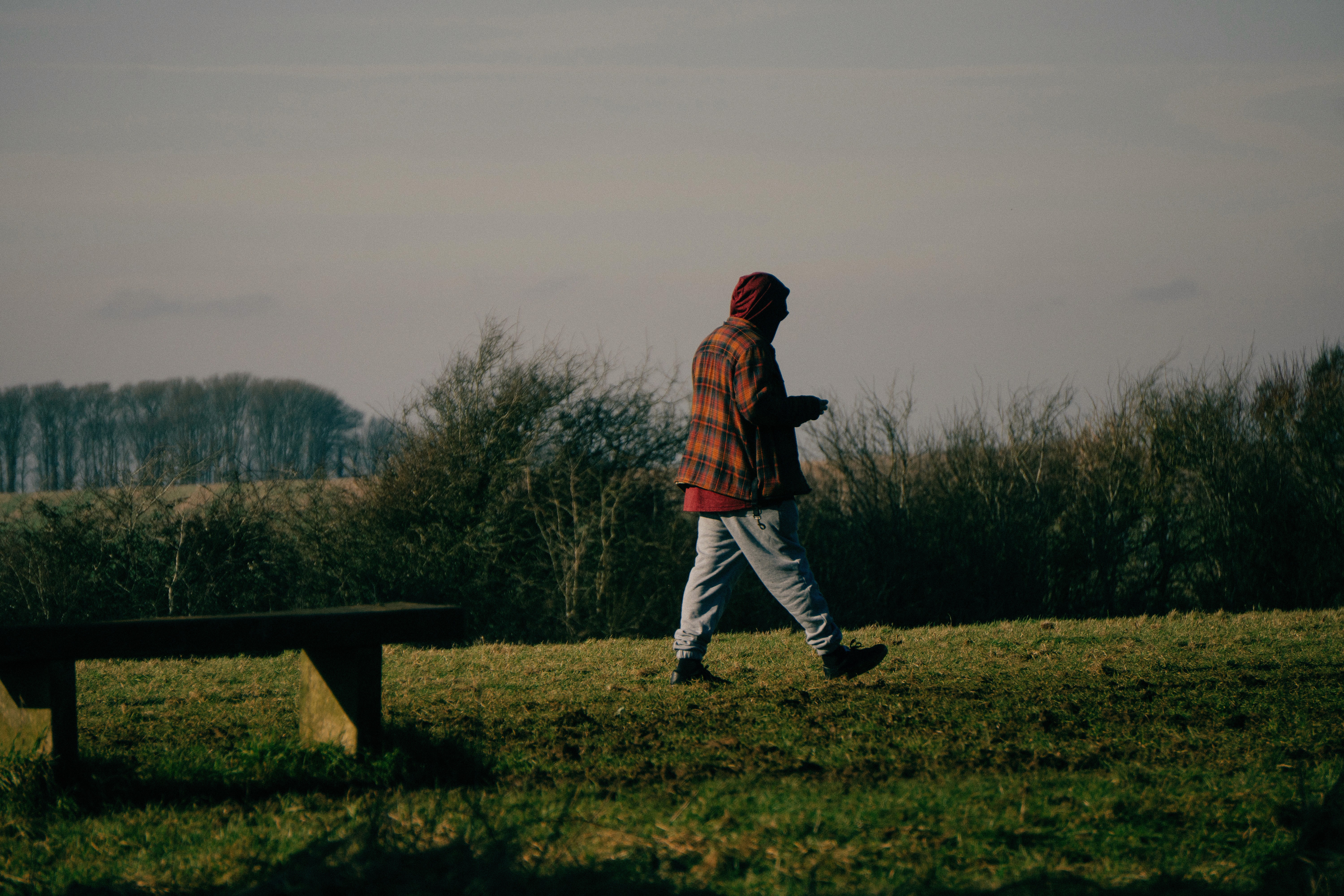
Since then Stanmer has been my plotting room. I work out a betrayal on the climb and test it on the descent. A dead drop becomes a hollow beech. A conversation between two spymasters plays out as I pass the church, and I try their lines aloud where no one can hear. The quiet death in Hove that opens Buddha's Requiem came to me on a grey afternoon under dripping trees. When a plot knots itself tight, I walk further until the woods loosen it.
I finish at the tea rooms with muddy boots and a full notebook. Hari is always a few steps ahead of me on the path.